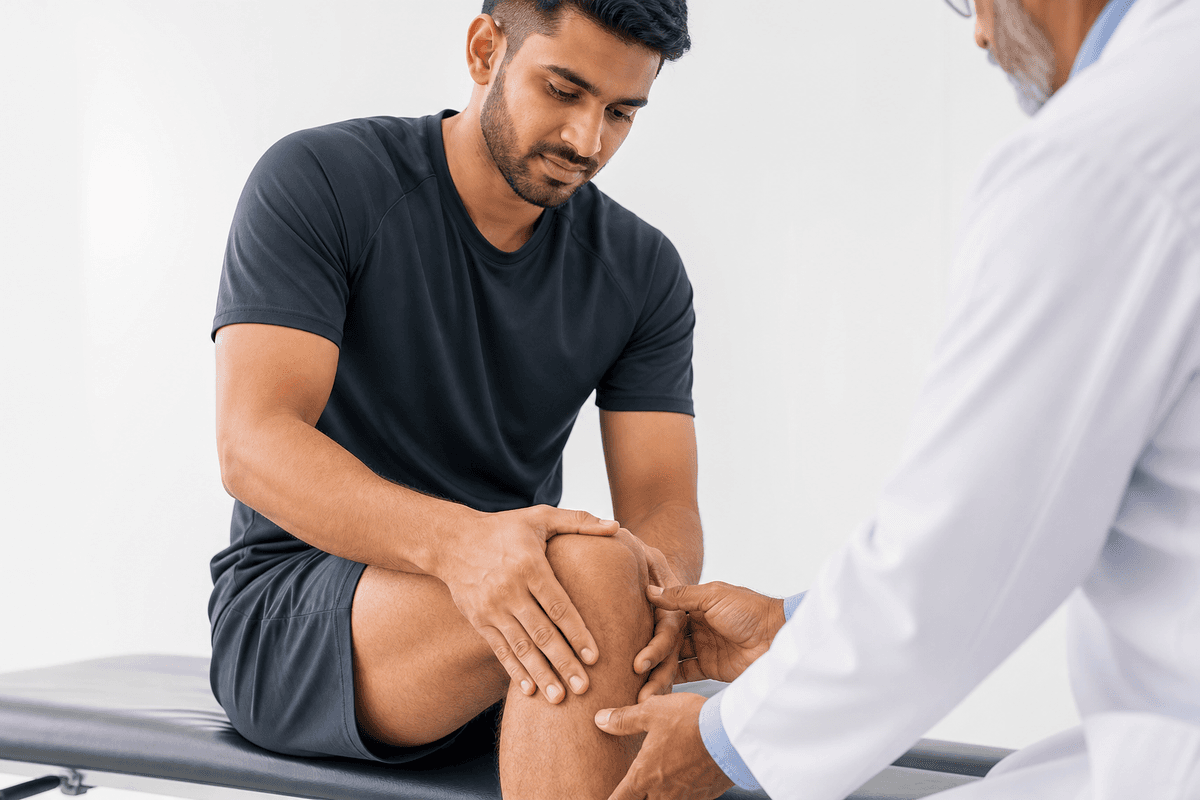
Treated by Dr. Hari Prakash at Dr Hariprakash
Sports Injuries are common musculoskeletal conditions affecting athletes and active individuals in Hyderabad, ranging from acute trauma to overuse injuries. These injuries can involve bones, muscles, tendons, ligaments, and joints, impacting performance and daily activities. Dr Hariprakash provides comprehensive sports injury management using evidence-based treatment protocols tailored to each patient's needs.
Sudden injuries resulting from direct impact, collision, or falls during sports activities. Include fractures, dislocations, contusions, and acute ligament tears. These require immediate medical attention and proper immobilization to prevent further damage and ensure optimal healing.
Chronic conditions developing gradually from repetitive stress and insufficient recovery time. Common examples include tendinitis, stress fractures, and bursitis. These injuries result from training errors, poor technique, or inadequate conditioning programs requiring modification of activity levels.
Damage to muscles, tendons, ligaments, and other connective tissues without bone involvement. Include sprains, strains, muscle tears, and ligament ruptures. Severity ranges from mild stretching to complete tears requiring surgical intervention depending on the structure affected and degree of damage.
Multiple factors can contribute to the development and progression of this condition.
Sports Injuries develops gradually. Recognising symptoms early gives you more treatment options.
From conservative to surgical — we always start with the least invasive option first.
A structured, patient-first approach from first visit to full recovery.
Dr Hariprakash conducts detailed clinical examination combined with advanced imaging studies including X-rays, MRI, or ultrasound to accurately diagnose the injury type, severity, and impact on surrounding structures for optimal treatment planning.
Dr Hariprakash develops individualized treatment protocols based on injury characteristics, patient age, activity level, and athletic goals, ensuring the most appropriate conservative or surgical approach for optimal recovery and return to sports.
Dr Hariprakash performs advanced arthroscopic and open surgical procedures using modern techniques and technology for injuries requiring operative treatment, focusing on anatomical restoration, minimal tissue trauma, and accelerated healing for athletes.
Dr Hariprakash coordinates comprehensive rehabilitation programs with progressive loading, sport-specific training, and objective performance testing to ensure safe return to athletic activities while minimizing re-injury risk and optimizing long-term outcomes.
What to expect at each phase of recovery.
Initial 1-3 weeks focusing on pain control, inflammation reduction, and tissue protection through rest, ice, compression, elevation, and immobilization as needed. Gentle range of motion exercises begin to prevent stiffness while allowing initial healing.
Weeks 3-12 involving progressive strengthening exercises, functional training, and gradual return to sport-specific activities. Focus on restoring full range of motion, muscle strength, endurance, and neuromuscular control with supervised progression.
Weeks 12-24 featuring advanced functional training, sport-specific drills, and gradual reintegration into competitive activities. Includes performance testing, biomechanical assessment, and injury prevention strategies to ensure safe return to full athletic participation.
Most patients achieve complete healing with proper treatment, regaining full strength, flexibility, and athletic performance. Success rates exceed 85-90% for timely and appropriately managed sports injuries with adherence to rehabilitation protocols.
Expert treatment prevents long-term complications including chronic pain, joint instability, arthritis, and recurrent injuries. Early intervention and proper rehabilitation significantly reduce risk of permanent functional limitations and premature athletic retirement.
Comprehensive rehabilitation often results in enhanced athletic performance compared to pre-injury levels. Correcting biomechanical issues, strengthening weaknesses, and optimizing conditioning lead to better overall function and reduced future injury risk.
Successful sports injury management allows patients to maintain active lifestyles, participate in recreational activities, and pursue athletic goals without pain or limitation. Proper treatment preserves joint health and musculoskeletal function for long-term wellness.
Untreated sports injuries can progress to chronic pain, permanent instability, and degenerative joint disease requiring more extensive interventions later. Incomplete healing increases risk of recurrent injuries, reduced athletic performance, and early retirement from sports. Long-term complications include arthritis, muscle atrophy, loss of function, and significantly diminished quality of life.
Seek immediate medical attention if you experience severe pain, inability to bear weight, visible deformity, significant swelling, or joint instability after sports activity. Consult Dr Hariprakash if pain persists beyond 48-72 hours despite rest and ice, if symptoms interfere with daily activities, or if you have recurrent injuries. Early evaluation prevents complications and ensures optimal recovery outcomes.
Early treatment means more options and better outcomes. Book a consultation to understand your condition and explore the right path forward.