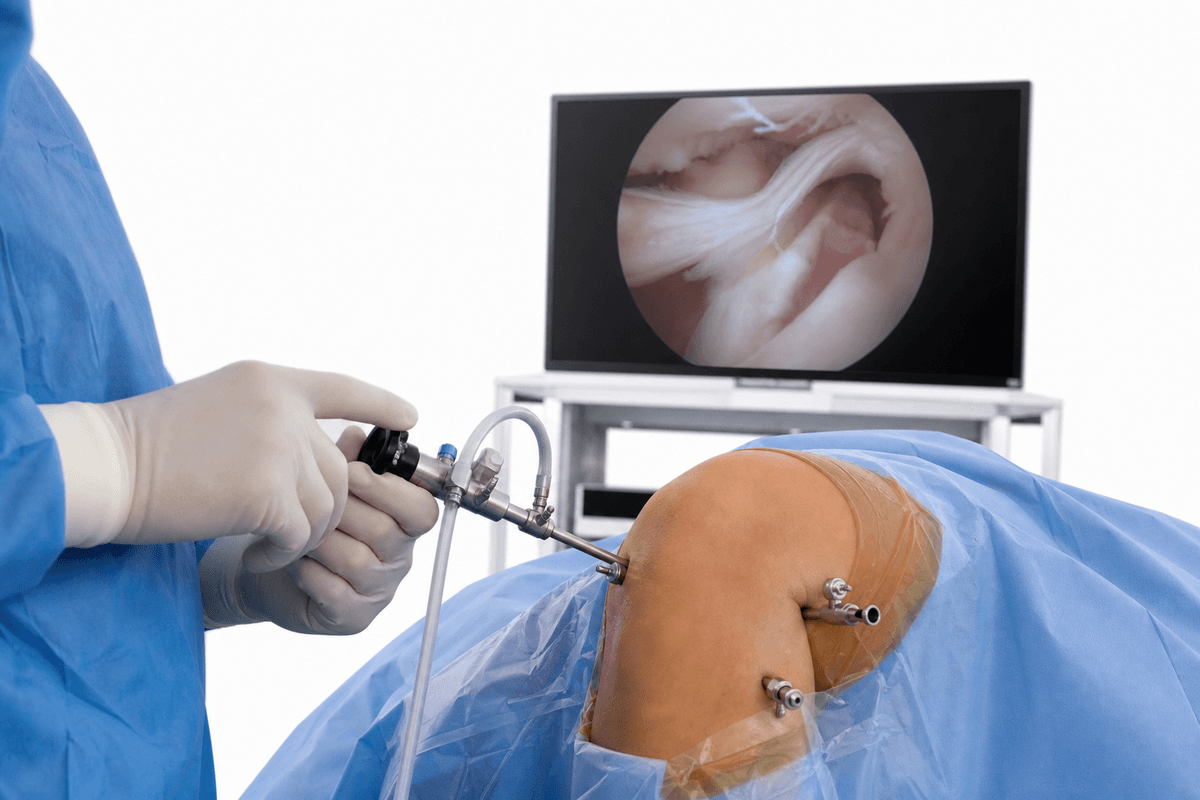
Performed by Dr. Hari Prakash at Dr Hariprakash
Tendon and ligament tears in Hyderabad require specialized orthopedic care to restore joint stability and function. These injuries commonly affect athletes and active individuals, involving damage to the connective tissues that support joints throughout the body. Dr Hariprakash provides comprehensive diagnosis and treatment using advanced surgical and non-surgical techniques tailored to each patient's specific injury.
We believe in honest, upfront disclosure so you can make an informed decision.
A step-by-step look at what happens during this procedure.
Comprehensive clinical examination combined with MRI or ultrasound imaging identifies the exact location, severity, and extent of tendon or ligament damage to determine optimal treatment approach.
Based on injury characteristics, the surgeon chooses between open repair, arthroscopic technique, or minimally invasive methods to access the torn tissue with minimal trauma to surrounding structures.
The torn ends are surgically reattached using sutures, anchors, or surgical staples. For complete ruptures or chronic tears, grafts from donor tissue or other tendons may be used for reconstruction.
The repaired tissue is positioned correctly and stabilized to promote healing. The surgical site is closed in layers, and a protective splint or brace is applied to immobilize the joint.
A structured physical therapy program begins after initial healing, gradually restoring range of motion, strength, and function through progressive exercises tailored to the specific injury and patient goals.
A structured, patient-first approach from first consultation to full recovery.
Dr Hariprakash conducts thorough physical examination and reviews advanced imaging to determine injury severity, patient activity level, and create a personalized treatment plan matching individual recovery goals.
Using state-of-the-art arthroscopic and minimally invasive approaches, Dr Hariprakash performs precise repairs with smaller incisions, reduced tissue trauma, faster healing, and improved cosmetic outcomes.
Dr Hariprakash designs customized rehabilitation protocols working closely with physiotherapists, monitoring progress at regular intervals, and adjusting treatment plans to ensure optimal healing and return to function.
Dr Hariprakash provides continuous monitoring through scheduled follow-ups, tracks strength and mobility improvements, addresses any complications promptly, and ensures patients achieve their pre-injury activity levels safely.
What to expect at each stage of your recovery journey.
The first 2-4 weeks focus on wound healing, pain management, and protection of the repair site. The joint remains immobilized in a brace or cast, with ice therapy and elevation to reduce swelling. Passive range-of-motion exercises may begin under supervision.
Weeks 4-12 involve gradual introduction of active motion and gentle strengthening exercises. The brace is progressively weaned, and patients work with physiotherapists to restore flexibility and rebuild muscle strength while protecting the healing tissue from excessive stress.
Months 3-6 emphasize sport-specific or activity-specific training, progressive loading exercises, and functional movement patterns. Patients gradually return to full activities with clearance from Dr Hariprakash, with continued strengthening to prevent re-injury and optimize long-term outcomes.
Surgical repair successfully restores mechanical stability to the affected joint, eliminating instability, preventing abnormal joint movement, and reducing the risk of secondary injuries or early-onset arthritis.
Patients experience significant reduction in pain levels and marked improvement in joint function, enabling return to daily activities, work responsibilities, and recreational pursuits without limitations.
Athletes achieve successful return to their pre-injury sport at competitive levels, with studies showing 80-90% of patients regaining full athletic capability within 6-12 months following appropriate rehabilitation.
Proper surgical repair and rehabilitation protect against progressive joint degeneration, preserve cartilage integrity, and maintain optimal biomechanics, ensuring better long-term joint health and quality of life.
Let's clear up some of the most common myths about tendon, ligament tears.
Get a personalised assessment from an experienced specialist. Understand your options, ask your questions, and decide with confidence.